|
TONY CAREY Ritchie was a prick and he's like famous for being a prick 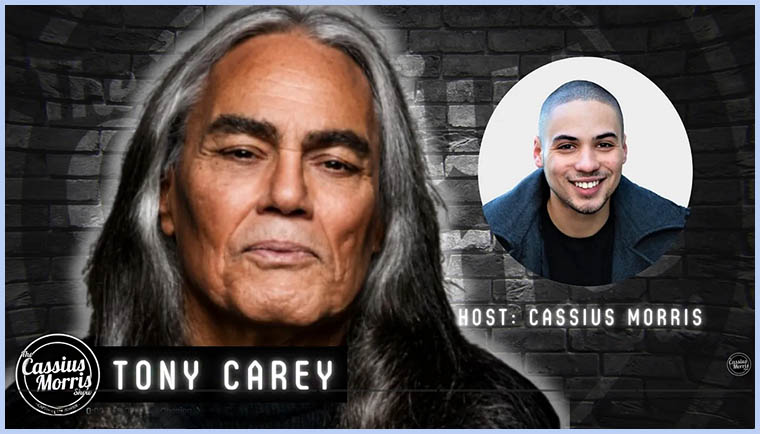 What inspired you to move to Germany? I had done Rainbow with Ritchie and we toured Europe and we toured through Germany and I met a bunch of people here. And then moved on and then we played the rest of the world and this and that. Didn't give it another thought. I left Rainbow in the summer of '77 during the Long Live Rock 'n'n Roll sessions. I got kind of mobbed out of the band. Ritchie didn't like me. I didn't like Ritchie. I left. That's a story in itself. And I went back to California and I got a telegram. And I don't know even know if you know what those are, but they're pieces of paper that knock on the door and give you a telegram. And it was a guy I had met in Munich, in Germany, and he was a record producer and he said: recording album, stop. Can you come, stop. Ticket on the way, stop. So I wrote I'm coming, stop. And two day later I was on a plane to Munich and that was 11th of August, 1978 and I've been here ever since. You do a lot of improvising and different versions live. That's kind of a callback to Rainbow in a way too. Rainbow and before Rainbow Miles Davis his "Bitches Brew" hit in 1970 and changed my attitude about live music. I saw Miles a couple times when I was a teenager and they'd play... their setlist was before songs. And they played two hours and it was just all improvisation and our setlist in the Rainbow Rising tour was nine songs or eight songs something, just a few songs. And they'd be sometimes 15, 18 minutes long you know. And it's all improvisation so I figured out really early that if you want to keep something fresh you got to improvise and these days I produce a lot of successful pop artists, like arena level pop artists. And they all have in-ear monitors, they'll be playing with a click track, like a metronome, in their ear. I mean unbelievable. And they record every show. So if the second keyboard player gets sick the next night, they just use what he recorded the night before. You guys never had click tracks back then? No. And I don't use them now. I always sit and listen, I'll follow the drums, play with the band. I don't want a cowbell in my ear you know. Donk donk donk donk. I don't want any of that... Why do so many people use them now? Because there's a lot of things connected to the timing and if a band like Rammstein, if the band has pyrotechnics it could be really really dangerous. If you're in a wrong place at the wrong time and the same information in the click track, it's MIDI information, the same information controls lighting cues. And when the lights change... so they spend a month rehearsing and the lighting engineer will work the show out, film it a few times for the artist, make sure everybody likes everything and then every single night when the background ladies sing, this lights will come you know and that's all controlled, it has to be in sync as it were. So it's a lot more like a Broadway show or a theater production... it's nothing to do with rock or jazz or anything. Tell me if I'm getting this right, in the Rainbow Rising days you guys would be on stage, no in-ear monitors, no earplugs, just raw sound? Really loud monitors. And I was lucky, we had huge amplifiers which people don't use anymore and the tweeters were higher than my ears. If you see the pictures from "On Stage", live pictures from us in those days this huge four gray speaker cabinets, two of them are keyboards and two of them are bass. And the horns, the high frequencies, are way over there like 8 ft tall. So I saved my hearing. The worst thing was Cozy Powell's cymbals. They're the loudest thing in the room. And these days drummers put plexiglas around the drums, just to keep the cymbals under control but it's really dangerous, it's loud, it's like 140 dB, it's like a gunshot you know, a real loud cymbal crash. And that can be dangerous. Everything's changed, I mean it's completely different than... we were Stone Age, Bronze Age you know, 50 years ago and the idea was we played everything too fast. I never heard us sound good live, I never thought we were good live, we were way too fast. I mean the excitement was definitely there. Ritchie's a genius showman. Ronnie, Cozy, me, Jimmy, everything worked. But we were always way too fast, sometimes double speed from the record and the record's like... Man on the Silver Mountain have this great groove, a really good rock groove and then live it's like rabbits fuckin' so I never really cared for the live recordings I heard. Why do you think that was? Adrenaline. Cozy Powell. Adrenaline and alcohol. That sums up 70s rock. Sums up the whole era. Drugs, alcohol, adrenaline, you know excitement. Our opening act was AC/DC in Europe and then when we went to Australia they opened for us there as well. And who knew how big they were going to be but they were fabulous as I was buddies with Bon and these kids could drink and we'd have some wild times. That was a whole different era with Bon Scott and to me it's hard to picture because a lot of these guys are before my time so to me it's like picturing you know Superman as a real person that's why it's cool to talk to guys like you who are actually here. Yeah. You got to really keep in mind that we are talking about real people and another good friend of mine was John Bonham and he was miserable. He hated touring, Jason had just been born in '76, '77 and John wanted to be in England with his new baby boy you know. He did not want to be on the road in America and drank way too much, he wouldn't have drunk nearly as much if he'd been with his family. He drank himself actually to you know accidentally to death just like Bon did. How old was Bon? 29? And Bonzo was about 30 whatever and it's really critical to remember that you're not talking about Marvel Comics superheroes and Spider-Man, you're talking about people and nothing's going to change, people are still people and I mean I've met some people, I met B.B. King, B.B. King bought me a drink one time. At the Grammys in 1984 in Los Angeles and I was almost in awe cuz he was the coolest guy I ever met. I love B.B. King but I would say everybody except BB King is just people. BB King was royalty. When you're seeing people at the time cuz when you joined Rainbow, you were like 21, 22, correct? Yeah 21. You guys are going hard and fast. Does that make you second-guess the pace? Does it make you slow down or was it full steam? No. Full steam and that's the point, if any of them had been adult, it should have, but it didn't and the ones that made it through got lucky or got smart. I mean, like Queen. Brian May was never going to be a drug addict, he's a astrophysicist. He's a brilliant, serious, studious man. But Freddy was born to die of AIDS. I mean, he just went for it his whole life. One would think that you could look at your peers falling like flies, as it were, and take notice of that, but nah. People are people. You always think, that'll happen to the other guy. It'll never happen to me. Right. But in a strange sense, some of it didn't happen to you. So, so were you right in a way? Yeah. I'm immortal, yeah. [laughter] I am indeed immortal, yes. The secret's out. I am indeed Nostradamus and immortal. [laughter] The two secrets. 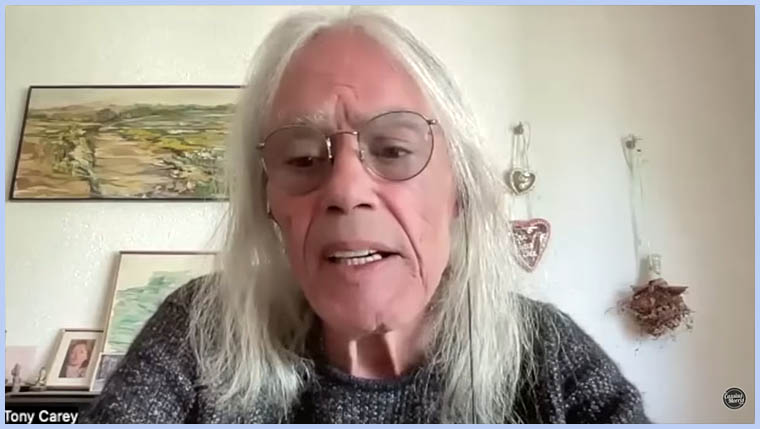 So, speaking of that era, obviously we all know the story of you, you're in the studio, Ritchie Blackmore hears you from rooms away, and you're invited to come and audition. What was your first impression of Ritchie as sort of a band leader at that time? He was a prick and he's like famous for being a prick, which I don't care, I don't much care. He was an absolutely brilliant musician and on a musical level, no problem ever. It was like wordless communication and good musicians could communicate that way. You don't need to talk about it very much. You just do it. On a personal level, less so, but on bottom line, it didn't really matter. And in fact, the only reason I was in LA is cuz I had a major record label deal with ABC Dunhill. Gary Katz from Steely Dan was producing. And when Ritchie heard me, I was rehearsing with Jeff Porcaro and Mike Porcaro on bass and Ritchie was auditioning keyboard players two rooms farther on and I play loud, so he heard me and sent somebody over, but I would have been all right either way. I had a major record record deal. We would have been successful. But the way Gary Katz makes records... like the first thing he does is fire the drummer and he uses studio guys and it sucks the soul out of the band. A record label signs a teenage rock band straight out of high school because they felt something that moved them and the spirit of the times or whatever and then they give us to this slick New York production team who doesn't get it. They said, "Well, these kids can't play." And you know, against who do we have playing? Jeff Porcaro! Our drummer probably couldn't play. I would agree our drummer is not as good as Jeff Porcaro, but still the chemistry of what we had, that's what they signed. That's what they paid the million dollars for. And then to come into the studio and it all falls apart and we went 18 months and they spent a couple million bucks and we couldn't get anything on tape. We had nothing. So, I was already thinking end game. I was a kid. I was 19, 20. I was always jealous of Tom Petty. Tom Petty came two years later and they got Ted Templeman to produce them from Warner Brothers. Warner Brothers signed the Heartbreakers. And Ted Templeman made them do 100 takes of "Breakdown". And well, what I'm saying is he let them learn how to make records. And I was always really jealous of that cuz nobody ever let my band, who was also major signing from a big label, they took that all out of our hands. They said, "Just go away, kids. We'll make the record and we need you to sing. And then this kind of thing. So, I was a kind of jealous of Tom Petty cuz they learned how to make records. They learned how to be studio guys, they were the Heartbreakers, legends. They're one of my favorite bands ever and some of the coolest guys I ever met and they had an easy ride. So, our ride, we were like didn't know what was going on. So, Jimmy Bain came over and he said, "Ritchie's over here looking for keyboard players. Would you like to come audition?" And I said, "Yeah, I'll see you tomorrow." And I called my dad, I was in West Hollywood. I called my dad on the East Coast. I said, "Dad, I'm going to be a rock and roll star." He says, "I thought you already were." I said, "No, I mean a real one, probably." Cross your fingers, but I know I'm going to get this gig. It's funny stuff. And you went in and you got it. It seems there's a lot of focus on Ritchie, maybe being difficult to deal with as a person and less emphasis on his musical genius. And the one thing that you've been consistent about when speaking about him is that while some of those aspects may have been true, the emphasis is on the musical genius. Do you think that's what played? Yeah sure. It doesn't matter. I mean, Van Morrison's a very difficult man. I would use stronger language, but I won't, but he's very hard to get along with. A lot of people are hard to get along with and they're artists. Artists are strange and Ritchie was an introverted extrovert. He's like very... I wouldn't say anything. And then on stage, he'd climb these theaters and he'd be up in the second balcony with his guitar. He was just an amazing showman. And when he smashed his guitars up and blew up his amplifiers, I mean, I'm a fan for life when I see that stuff. So, the personal side, actually, who cares? If nobody gets like hurt or seriously hurt or whatever. Feelings hurt doesn't count. This is we're playing in this is big league. This is the NFL, you know? Getting your feelings hurt doesn't count. What counts is going out and entertaining however many people happen to be in the audience and have them go home and say, "Man, that was a show." So, that's what counts, right? So, I'll never talk about any colleague on a purely personal level cuz personal doesn't count. Doesn't matter. It sounds like you went in there with that mindset. I think that the NFL is a great analogy for that. Like this is the team and we're not necessarily best friends in every case, but that doesn't really matter. I mean, everybody hated Dennis Rodman, and everybody also thought it. And he'd come in and eat chicken and waffle takeout, you know? And they wouldn't even take a shower. And then he'd play an amazing game and they all thought he was a pig, he's this and that. And but nobody cared much for Dennis Rodman and he's with the Korean dictator. He's got orange hair. He's Dennis Rodman. But the point is when he hits the court, he's a team player, he delivers. He could be counted on to deliver. And they respected him and that's the only thing that anybody will really remember is what a great player he was, not what an eccentric you know, I won't even say asshole, I never met him. I don't know what he was like. I imagine he's a lot of fun, actually. Sure. I guess it depends what context. Yeah. Seems like he'd be the guy to be with in a club, and after a playoff game, but so I can't speak to his to his character other than I thought he's funny. I thought he was funny. I know that Billy Corgan was his buddy. They're both from Chicago. And Billy loved Dennis and he said the same thing. He said he was just a freak. He was just weird. And he's just loved him and Chicago people are a little different than the rest of the world anyway and so Billy got along great and Michael Jordan is the perfectionist and he's this and he likes to criticize and he is the goat. And that's but end of the day doesn't matter. That team was fabulous and Dennis was a big part of it, so. When we look at Dio, completely different personality, just totally the other side of that coin. How did those two personalities coexist within the band? Was there friction or did they kind of let each other live in their own spaces? Well, first of all, Dio Ronnie was my uncle. He was 14 years older. He was an American. He was from Upstate New York. And I could talk to him about anything. He was always sympathetic. He liked to talk. Wendy, his wife, she was there right from the beginning. And managed him his whole career. So, Ronnie and me were like he's my uncle. Ronnie and Ritchie... Ronnie took it till he couldn't take it anymore. Well, I mean Ronnie was Ronnie, Ritchie was Ritchie. Obviously, creatively they were the dream team. But then it came to the point where Ritchie said we got to compete with Foreigner. Which I also understand cuz Ritchie was paying for everything. And it was all coming out of his pocket. And he's watching Foreigner with "I Want to Know What Love Is" making $25 million dollars and our album's at number, you know, 93 in the Billboard charts for 3 weeks, then goes away. You got to see every aspect of it, so Ritchie didn't really care what music he played, but he needed to make some money. He needed to make a profit. He was going broke. I mean, that Rainbow, that whole light and the crew, that cost a fortune and all the logistics and lawyers and the flights and hotels and the retainers and whatever. So, you got to look at both sides of that, too. Ronnie finally said, and this was after I'd left.... this is one album later when they got Graham, Ronnie said I don't want to do love songs. I'm sorry. I won't sing love songs and I'm out. He had a really good third leg. He had already met Tony and he knew he was safe. He wasn't giving up his place at the disciples table out of principle. He had a fallback position that was like untouchable and in fact, I think, legend has it, I wasn't there, but they had a play at Tony's house and he wrote "Children of the Sea" or something. One of those great early Dio/Iommi compositions and they both knew, okay, we got to have a band. So, you have to look at it from that perspective too. On stage, everybody maybe was polite, but Ritchie was like he kept his distance. He didn't see much of Ritchie. So, it's not like he was aggressively a dick, like come at you, like loud and hard cuz he's not. He's very soft-spoken. But only thing where he really surprised me is when we came back to do "Long Live Rock and Roll", Jimmy Bain was gone. And what? Cuz Jimmy was such a wonderful bass player. Such a funny guy, had so much charisma. He's a Scot. He could drink all of us under the table. He's legendary. And had a great sense of humor and I loved his sound. He had this deep simple rock sound and Ronnie loved it too. Jimmy was in Ronnie's band. And I started to get the picture what's going on here. I knew he hated me like on a personal level, so if I hadn't been asked back, I would have understood. But Jimmy's gone? What? What's going on? Bobby Rondinelli told me that he wants to start a retirement home for ex-Rainbow members, but it's got to be like 35 beds. 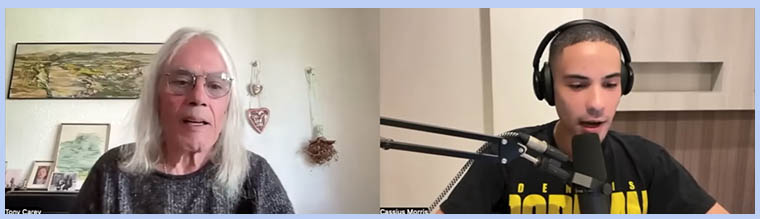 When you left the group, do you feel like you left the band on good terms? No, horrible terms. Horrible, awful terms. The worst terms. I fled in the middle of the night. We were in the Chateau Hérouville, which is where Elton John made his "Honky Chateau" record. About half an hour outside of Paris, way out in the sticks in the country and it was a 16th or 17th century estate, a castle where Chopin had lived and worked. My only thing was how do I get to the airport at 4:00 in the morning? And this is pre-internet and pre-everything. This is 1977. Once again, I called my dad in California, woke him up. I said, "Dad, I'll tell you why when I see you, but listen, you got to get me a ticket from Charles de Gaulle to L.A.X and have it be waiting there in 2 hours." Which he did. And then I woke Colin Hart, who is still one of my dearest friends. He's still going. He's retired, he lives in Florida. He was our road manager for Purple and for Rainbow. Colin had enough. He knew everything. I said, "I'm leaving. You got to organize me a ride to the airport." Which he did. So, you know, I packed up and basically fled. And I don't think they knew I was gone for several weeks. Well, I mean, not weeks maybe not, but days at least because maybe they thought I just got into Paris to party. Or I met somebody or bought somebody with a pocketful of pills or weed or whatever. And I don't think it dawned on them that "oh, he's not coming back". I think that dawned on them for quite a while, so that I thought that was funny. And I was back in West Hollywood with decompressing from this amazing mobbing adventure that I'd had. What made you have to leave so urgently at 4:00 in the morning? I can't tell you. I mean, I could tell you, but then I'd have to kill you. Have you ever revealed what it was before? Yeah, about 35 years ago in some publication. When I was still pissed about it. When I was still upset about it. But in the last 25 years, no. Just we didn't get along. It was getting it to a point where it was physically dangerous. Somebody could have got really badly hurt. Me. Could have got really badly hurt, so. I had to leave. I can understand that and out of respect I'm not going to press you on what the issue was, but I am curious, why is it important for you to keep that close to your chest? You mentioned that you're not pissed about it. Cuz I'm not a victim. I'm not a victim ever of anything. I decide. And I never feel victimized either. I get angry. I mean, it could take me a year or so to get over something that was an insult to my anything, but you know, I'm a human. But I'm not a victim because... you see Bob Daisley notoriously got fucked by Sharon Osbourne cuz for "Diary of a Madman" and "Blizzard of Oz". And we're talking millions. We're talking a lot of money. But not only did he tell everybody about it, which I wouldn't have done. He wrote a book about it. And he did 50 podcasts about it and.... I like Bob. Bob's great. I know his manager really well in Australia and Bob's fantastic but don't be a victim. I mean, keep it to yourself, you know, suck it up. Be a Seal Team Six tough guy and suck it up, cuz it's life. Life comes at you. Life happens and then you move on. You do your best. You got to hire lawyers. If you lose, you lose. But the reason I haven't ever made an issue about any personal problems that I've had with any with anybody is cuz I'm not a victim and I don't want to sound like I'm whining, cuz I'm not. As I've been extremely fortunate. I'm fortunate that I'm here. You know, I'm 72 years old and here I am so.... So, let me ask you this then. How long did it take you to reach this point and when you first left the group and were transitioning to your solo stuff, was it a rough transition? I was still really young. When I got to Germany, I was 24. And it is the summer of '78 and I don't can't even say that I remember. I was so busy, I didn't have time to think about it. Like I said, life happens to you. You could be one of these people and there are people like this that are really retrospective and they think about everything and what could I have done different and I'm not one of those people. I just let the wind blow me over and then stand up and then march on, as it were and try to stay out of the way of thinking too much is not always the solution. That's one life lesson. Here's another one. If you're the smartest person in the room, you're in the wrong room. If you're the best musician in a room, you're in the wrong room. So, these little life lessons, you pick up. When you were first in Germany, did you feel the sense of community right away? Did you feel like you were very involved in the scene there? You said that you kept busy. Well, I was fortunate. Once again, I've always managed to be in the right place at the right time. Now, I came over to play this record for this guy. That could have been it. I could have been here 10 days and then flown home. And at that point, I could have had a gotten a job with a lot of big bands. I had a lot of big bands who wanted me. The Sweet wanted me to be in their band. Gary Wright wanted to be in his band and I had all kinds of opportunities because of all kinds of doors had been opened because of, you know, just my association with the British folk. But when I got here, I amazingly or karmically or whatever, the universe at work, I found a studio where I could go in when the last paying client had left, which would be, you know, 8:00 in the evening, and play all night long. And learn how to use the equipment. And they had a piano and they had a Hammond organ and they had a Minimoog synthesizer. And it wouldn't cost me anything. With the understanding that when I was ready to start recording something. I would like be partnered with this guy that owned the studio, which is fair enough. And that's what I did. I've always had the feeling that the universe is sitting on my shoulder. Two angels on my shoulder but they're both the good ones. Neither one of them is the devil. Most people when we talk about the organ keyboard sound that really emerged through your era mention two names. They mention, of course, Jon Lord and then you. Do you accept that ranking as being one of the guys who really pushed the sound forward? Well, I'd say interesting question. I've never heard it phrased that way. I'm going to tell you something that is good controversial. I don't like any British keyboard players. Because none of them can swing. I think it was Duke Ellington that said it don't mean a thing if it don't have that swing. And none of them can play ba-doom doom doom ba-gum gum. None of them can do that. Not one. Not Keith Emerson, not Jon Lord. My influences were Ray Manzarek from The Doors and the jazz guys, Chick Corea, Herbie Hancock, the guys that can swing. So I never really cared about any of the British keyboard players. The exception being the classically inspired, my favorite keyboard recording of all time is "A Whiter Shade of Pale". It's just the best sound, the best played, the best touch. That's how you should use a Hammond organ. It's just wonderful. What Jon brought to the table was excitement. He was a great showman. While I did not care for the notes he was playing, he played the fuck out of them. He played them loud, he played them fast, he played them clean. He was a great looking guy. He'd rock that C3. Big tall guy. I met him later. quite a bit later and he's a lovely guy. Fantastic guy. The only English keyboard player I ever rated, I think, was Rick Wakeman. And cuz I thought he was like really groundbreaking in the way that Yes would have these little passages. He'd have the organ and then the Minimoog and then the Mellotron and these were all monophonic instruments. You couldn't press a button and have this huge sound like today, you just individually adjust every sound. A Hammond organ, that way, like the early synthesizers. Rick Wakeman I thought was actually the best ever British keyboard player. There were things that Jon Lord brought to the table that I didn't like, what he did bring to the table were groundbreaking and revolutionary and you got to give him that. You cannot take that away from him. He influenced everybody and he's great. He's better than me. I mean, he could wipes me out as far as playing loud and dramatic. If you listen to me live, I'm much more thoughtful and I concentrate much more on individual notes than these clusters of this, you know? And completely different style, completely different. And I focus on melody and swing. And Jon would focus on exciting, loud hard rock and he was brilliant of course. The other kind of tragedy with Keith Emerson, and I'd never met him, he cared so much, or maybe he was depressive anyway, that when his fingers got stiff... My fingers are stiff. I take a couple of salves and I take supplements, potassium and magnesium. I get cramps in my fingers. I'm 72. And my shows are solo. I can't ever take a break. I'll play 2 hours and I get cramps in my fingers. This is recent. This is within the last year. Ritchie had surgery on his pinky on his right hand. Ouch, you know, cuz he has arthritis. But anyway, Keith Emerson when his skills started to leave him he killed himself. And we don't know what else was going on in his life. Who knows if he's genetically inclined to self-destruct or hardwired to self-destruct or whatever. I don't know cuz I don't know him. I never knew him. But I thought that was sad that somebody would put such a value on his dexterity that it would put him into a suicidal depression when that starts to go. Because you can also play really really slowly. Listen to Air on a G String by Bach. And you can make people cry with the slow notes, too, Keith. What do you want people to know? For fans out there who may be tuned in and are ready to come and check you out? I have my Planet P Project and I've done seven Planet P Project records. I'm about to release the fourth one. It's called "Levittown" as a double vinyl for the first time. It's never been on vinyl. It was made in the CD era. And in fact, vinyl is so popular now that the lead time is like 17 weeks. So, it's still in production. I'm about to release it. It'll be everywhere. It's worldwide distribution. You can get it on Amazon. You can get it where you get your records. It sounds really good. I went and bought a record player cuz I didn't have one, so I could listen to the test pressing. And it passed the test? I had to send it back twice, they give you a couple shots, you know. I didn't buy any fancy ass million-dollar... I just bought a record player. Good record player that would plug into my studio, which is kind of a fancy ass, you know, so it sounds really good. And this is kind of an adventure to me cuz I haven't done vinyl for since 1988 or something. So, that's what I'd like people to know. Keep your eye out for Planet P Project "Levittown" double LP. Go to tonycarey.com and I'll send you one autographed. They're almost gone and there's not very many anyway. That's what I want people to know. © Cassius Morris Official (Podcast) - April 30, 2026  |